The belt did its job. The National Highway Traffic Safety Administration says it as plainly as any agency says anything: seat belts are the single most effective way to reduce deaths and serious injuries in a crash, and the Journal will not write a sentence that undercuts that. Wear it, every trip. But a belt works by catching the body, and the body it catches has a shoulder on one side of the strap. That shoulder takes the load. This entry is about what happens to it.
What the belt does to the joint
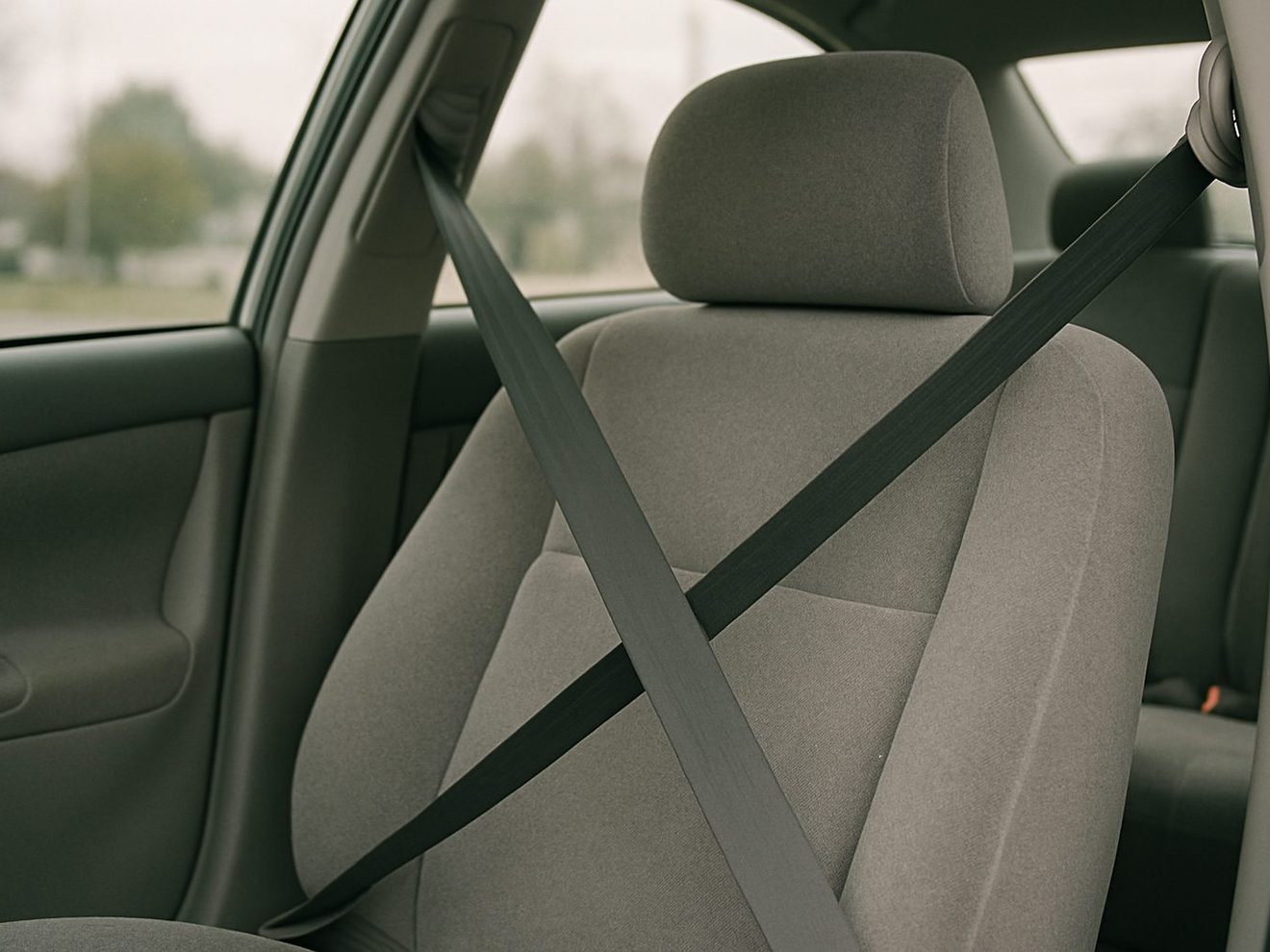
The shoulder is a ball-and-socket joint with a shallow socket, which is why it can reach so far in every direction and why it relies on soft tissue to stay put. The rotator cuff, the joint capsule, the labrum that deepens the socket, and the ligaments across the top of the shoulder do most of the holding. In a frontal or rear impact the belt anchors high on the pillar, crosses the collarbone, and loads all of that at once while the body tries to keep moving. The arm often flies forward or the hand was already braced on the wheel, which adds a second load from the other direction.
Common results, in the Journal's experience of what readers describe, are a strained cuff, a sprained joint at the top of the shoulder where the collarbone meets the shoulder blade, bruising along the belt line, and a neck that hurts on the same side. The bone is usually fine. The joint is not.
How the seatbelt shoulder complains
It waits. On the evening of the crash the shoulder may feel tender along the belt line and nothing more. By the next morning it is stiff, and by day two or three the pattern shows itself:
- Pain reaching overhead, especially between shoulder height and fully up.
- Pain reaching behind, to a back pocket, a seat belt, or a bra strap.
- A dull ache that wakes you when you roll onto that side.
- Weakness lifting a kettle, a child, or a bag out of the trunk.
- A point of tenderness right on top of the shoulder where the collarbone ends.
Readers often tell the desk they assumed they slept on it wrong. The timing is the tell. A shoulder that was fine before the crash and wrong within three days of it has a mechanism, and the mechanism belongs in the record.
What the exam looks for
A shoulder exam after a crash is a set of loaded movements and a few measurements. The examiner moves the arm through its range and measures how far it goes on each side, tests the cuff muscles one at a time against resistance, presses on the joint at the top of the shoulder, and checks whether the nerves running from the neck into the arm are behaving. The neck is examined in the same visit because shoulder pain after a crash is often neck pain wearing a disguise, and Entry 05 explains that stack.
Missouri Injury Clinic's auto injury lane is published as diagnosis and a written treatment plan after a crash. Findings go on paper with the date, and imaging is ordered when the exam asks for it rather than by default. Entry 06 walks through the whole visit.
Why this week, not next month
A shoulder that guards itself teaches the rest of the body to work around it. Within weeks the neck tightens on that side, the shoulder blade stops gliding, and the opposite arm starts doing the lifting. A cuff strain that would have responded to a plan in week one becomes a shoulder that cannot reach the top shelf in week eight. Early assessment keeps the guarding phase short, and the dated findings from the first visit give every later visit something to measure against.
If a claim is ever part of your story, that dated record from the first exam is what everyone will ask for. The Journal says it once per entry and means it exactly as written: the record is a care document first, and you do not need to have decided anything about a claim before you get examined.
Get the joints examined this week
Call the Tesson Ferry office, say it was a crash, and ask for an exam this week. Findings on paper, a written plan, and three offices across the metro if south county is not your side of town.
Tesson Ferry (314) 530-5480 · Hazelwood (314) 627-1411 · O'Fallon (636) 280-0990
Advertising disclosure. This page is advertising. This desk is compensated for featuring Missouri Injury Clinic, and it is not the clinic, not a law office, and not a party to anyone's insurance claim. We publish only the lanes, offices, and hours the clinic publishes on moinjuryclinic.com. We do not write reviews, rank providers, or give medical or legal advice. This entry is educational and is not medical advice.