The Journal does not usually cover the spine; other desks do that and do it well. But the neck earns an entry here because it is, anatomically, a stack of joints. Seven vertebrae, and between each pair a disc in front and two small facet joints in back, each one a real joint with cartilage, a capsule, and a nerve supply. Whiplash is a joint injury before it is anything else. It belongs in this Journal for the same reason the shoulder does.
What the whip does to the stack
In a rear-end hit the seat pushes the torso forward while the head, which has nothing pushing it, stays where it was for a fraction of a second. The neck is forced into an S-shape, then the head snaps forward past where it started. The National Institute of Neurological Disorders and Stroke describes whiplash on its disorder page as a soft-tissue injury to the neck from that sudden back-and-forth motion, with symptoms that may be delayed.
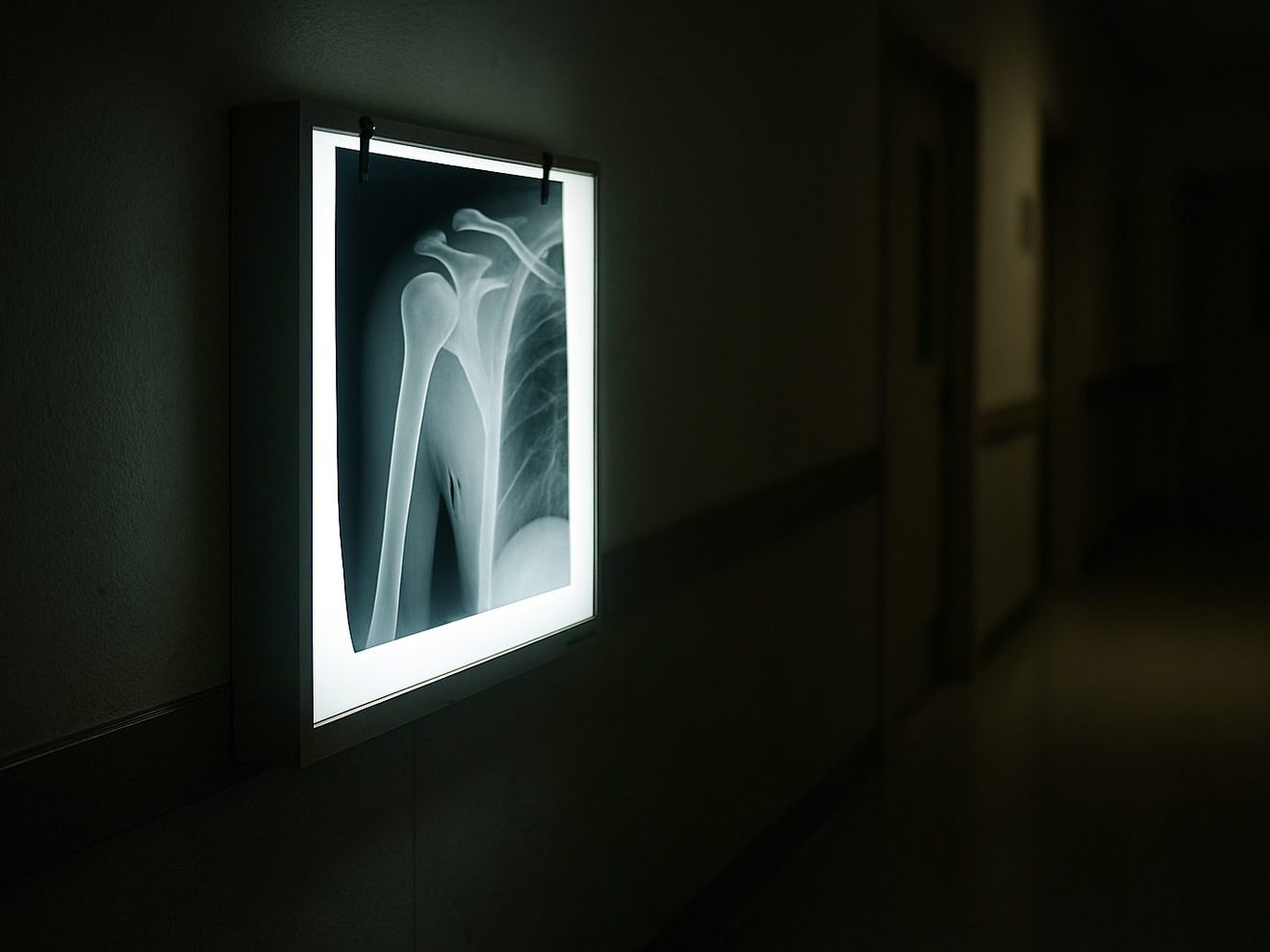
What gets hurt, joint by joint: the facet joints in the lower neck are compressed on the way back and pulled open on the way forward; their capsules stretch. The small muscles that fine-tune head position are strained. The discs take a shear load. The ligaments along the front of the spine are stretched on the way back. None of this shows on a plain x-ray, which is why a normal film at the emergency room does not mean a normal neck.
The morning after
Whiplash keeps the crash's schedule. Evening of: a little stiff, mostly fine. Morning after: the head will not turn to check a blind spot, and there is a headache that starts at the base of the skull. Day two and three: the stiffness peaks, pain may run into one shoulder blade or down an arm, and the person who felt fine at the scene is now driving with their whole torso to change lanes.
The delay is inflammation and guarding, the same pair described in Entry 01. The neck muscles lock down to protect the irritated facet joints, and the locked muscles hurt on their own. The headache is usually the upper neck joints referring pain upward.
What the exam does with a neck
A neck exam after a crash is range of motion measured in each direction and compared to normal, palpation of each level to find the joints that are tender, neurological testing of the arms for strength, reflexes, and sensation, and a set of orthopedic tests that load the facet joints and the nerve roots separately to tell the examiner which is complaining. The shoulders are examined too, because the neck and the shoulder share nerves and blame.
Missouri Injury Clinic's auto injury lane is diagnosis plus a written plan. The clinic also publishes a separate TBI and concussion lane, with tools it names plainly: vagus nerve stimulation, neurofeedback, Alpha Stim, sensory motor integration, exercise with oxygen, oculomotor rehabilitation, and cognitive rehabilitation. The Journal raises that here because neck pain and concussion symptoms travel together after a rear-end hit, and a reader with fog, screen intolerance, or a headache that will not clear should say so on the phone so the right lane hears it.
The stack, on paper
A neck record is a set of degrees and levels: rotation left and right, flexion and extension, which levels were tender, what the arm testing showed, what the plan is. Dated from the first week, those numbers are what let the third visit say "better" in a way that means something. Entry 07 is the Journal's full entry on why the record is a care document first.
Examined this week, documented from visit one. The nearest office for this edition is on Tesson Ferry, and all three offices run the same exam.
Get the joints examined this week
Call the Tesson Ferry office, say it was a crash, and ask for an exam this week. Findings on paper, a written plan, and three offices across the metro if south county is not your side of town.
Tesson Ferry (314) 530-5480 · Hazelwood (314) 627-1411 · O'Fallon (636) 280-0990
Advertising disclosure. This page is advertising. This desk is compensated for featuring Missouri Injury Clinic, and it is not the clinic, not a law office, and not a party to anyone's insurance claim. We publish only the lanes, offices, and hours the clinic publishes on moinjuryclinic.com. We do not write reviews, rank providers, or give medical or legal advice. This entry is educational and is not medical advice.