The knee has no socket to hide in. It is a hinge built from two long bones, a kneecap that glides in a groove, two cushions of cartilage, and four ligaments that keep the whole arrangement honest. When a knee meets the underside of a dashboard, the glovebox door, or the steering column, the force goes straight in through the front of the joint. At highway speed that is a known injury pattern. At parking-lot speed it is the injury readers describe to this desk as "I bumped my knee, it's fine."
What the dash does to a hinge
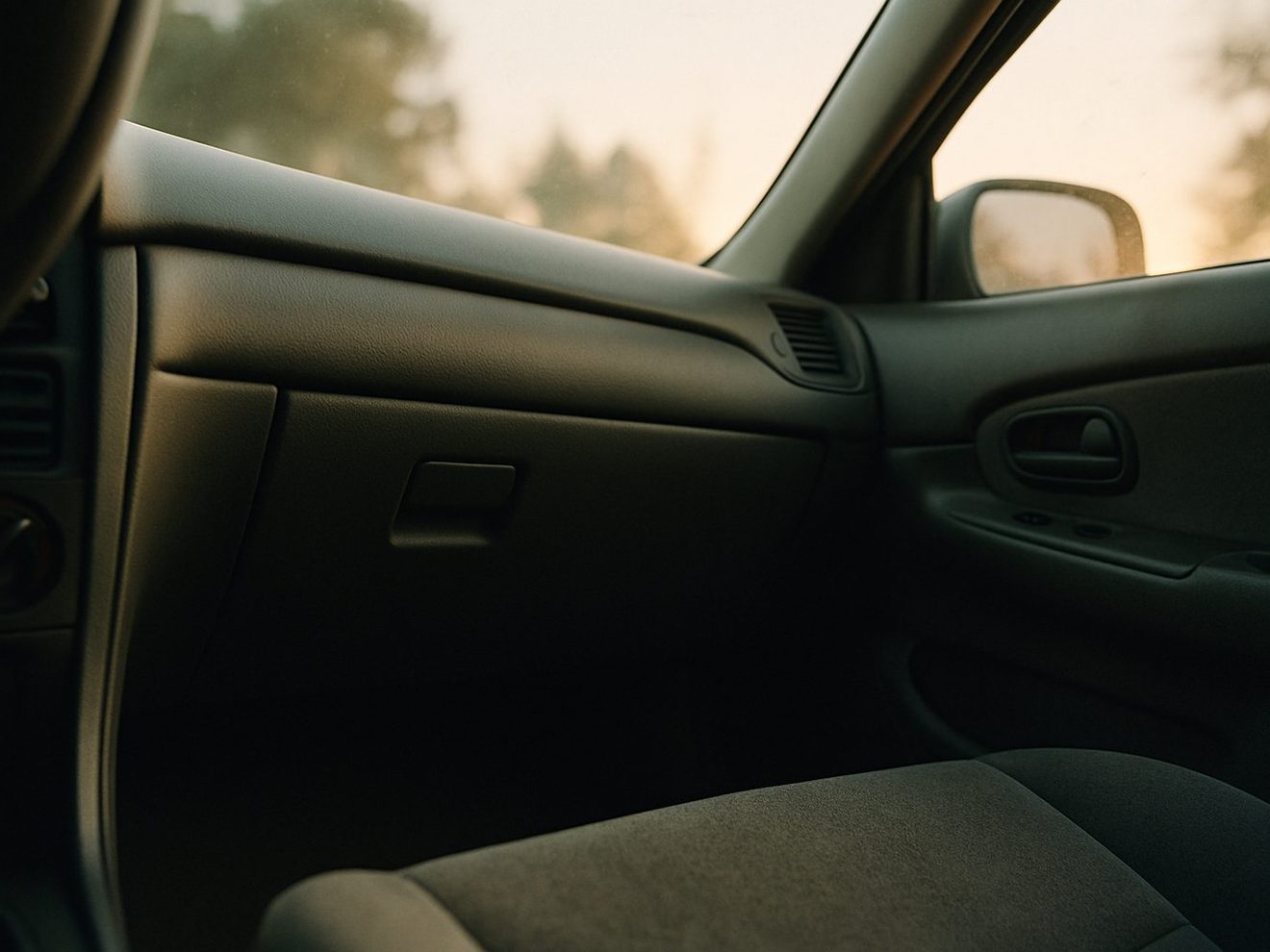
Picture the leg at the moment of impact: foot on the brake, knee bent, shin pointed at the dash. The car stops, the body keeps going, and the front of the shin or the kneecap hits the first hard thing in its path. The kneecap takes a direct blow, the shin bone is driven backward relative to the thigh bone, and the ligament whose job is to prevent exactly that motion gets stretched. Meanwhile the cartilage cushions are pinched under a load they were not ready for.
Most of this leaves no mark. A bruise on the shin, maybe, that fades in a week. The joint itself is what holds the injury, and it does not bruise where you can see it.
Fine standing still, wrong on stairs
The dashboard knee has a particular pattern and readers describe it the same way almost every time:
- Walking on flat ground is fine. Stairs, especially going down, are not.
- The knee feels swollen or "full" by evening, and tight first thing in the morning.
- A click or a clunk that was not there before, usually with a deep bend.
- Trouble getting the knee fully straight, or a sense it might give way on a turn.
- Pain kneeling, or pain sitting with the knee bent for a long drive.
Stairs are the tell because descending a step loads the kneecap against its groove with several times body weight. A kneecap that took a direct hit objects to that, even when it is happy to stand in line at a store.
What the exam loads and measures
A knee exam after a crash is a hands-on set of tests. The examiner checks for fluid in the joint, measures how far the knee bends and straightens compared to the other side, presses on the kneecap and along the joint lines where the cartilage cushions sit, and stresses each ligament in turn to see whether the shin moves more than it should. Gait and a single-leg stance tell the examiner how the hip and ankle are compensating. The goal is a finding: which structure, how much, and what the plan is.
Missouri Injury Clinic publishes its auto injury lane as diagnosis and a written treatment plan after a crash, and its sports injury lane as return-to-training care. A dashboard knee sits in both. Imaging is ordered when the exam asks for it. Entry 06 has the full visit.
The record for a knee
A knee record reads like a set of numbers: degrees of bend, degrees of extension, which ligament test was tight and which was lax, whether there was fluid, what the gait looked like. Those numbers dated from the first week are what make the second month measurable. A knee that improved from a documented baseline is a recovery. A knee that "feels better, I think" is a rumor. Entry 07 is the Journal's entry on why that matters, and it applies to every hinge on this site.
The standing prescription applies: examined this week, documented from visit one, three offices across the metro, the nearest one on Tesson Ferry. You do not need to have decided anything about a claim before you get examined.
Get the joints examined this week
Call the Tesson Ferry office, say it was a crash, and ask for an exam this week. Findings on paper, a written plan, and three offices across the metro if south county is not your side of town.
Tesson Ferry (314) 530-5480 · Hazelwood (314) 627-1411 · O'Fallon (636) 280-0990
Advertising disclosure. This page is advertising. This desk is compensated for featuring Missouri Injury Clinic, and it is not the clinic, not a law office, and not a party to anyone's insurance claim. We publish only the lanes, offices, and hours the clinic publishes on moinjuryclinic.com. We do not write reviews, rank providers, or give medical or legal advice. This entry is educational and is not medical advice.